
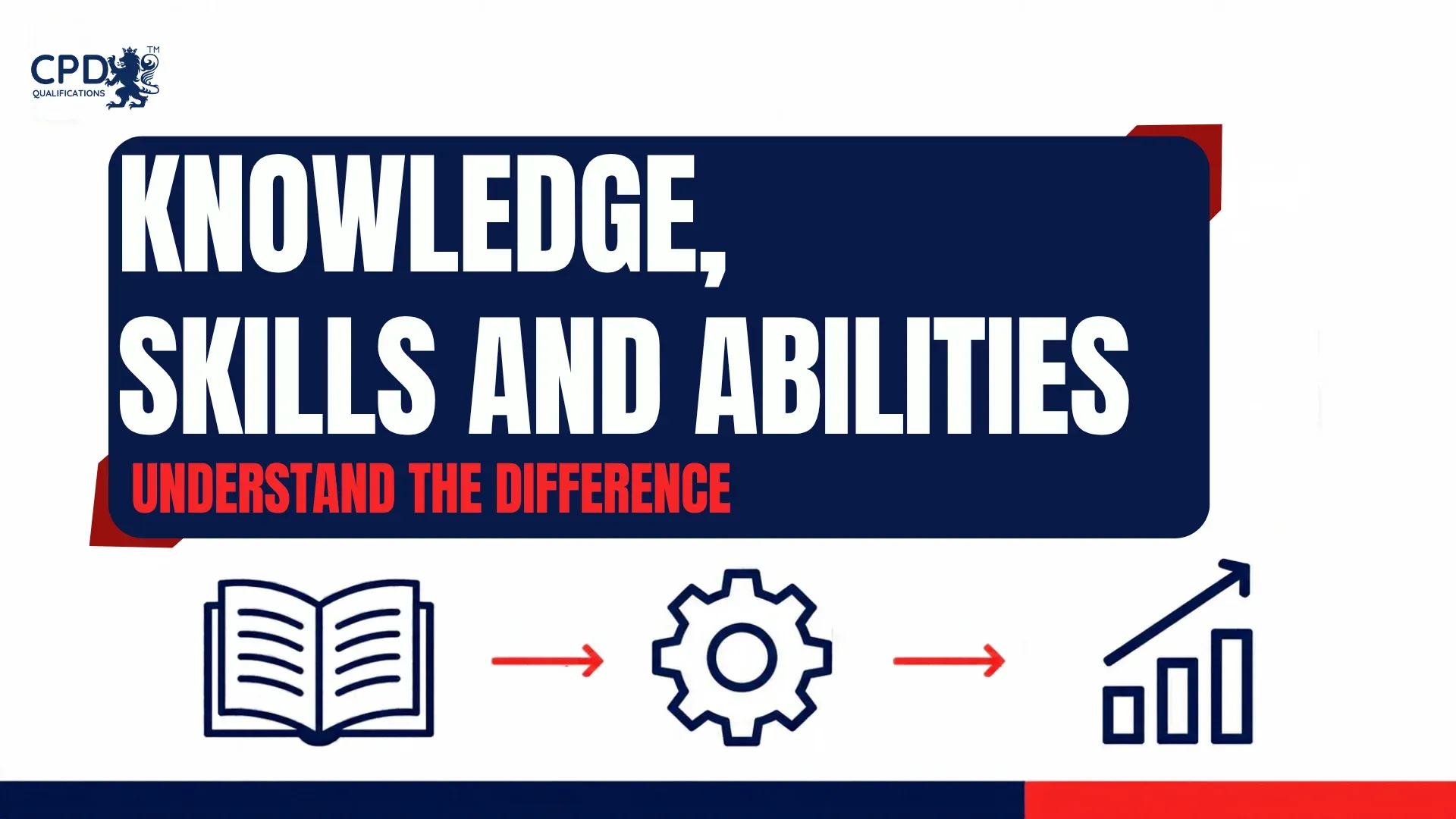
Knowledge, skills and abilities describe different parts of what a person needs to perform effectively. Knowledge is what someone understands, skills are what they have learned to do, and abilities are their broader capacities to perform tasks or respond to situations. Together, they can help employers describe job requirements and help individuals identify development needs.
The three terms are closely related and are sometimes used interchangeably in job descriptions. A person may need relevant knowledge before learning a skill, then use that skill with other abilities to complete a task successfully. Understanding the differences makes it easier to assess your current capabilities and choose suitable professional development.
The knowledge, skills and abilities required for a job depend on its responsibilities. A technical position may place greater emphasis on specialist knowledge and practical skills, while a management role may also require leadership, judgement and communication abilities. Applicants should therefore review the specific vacancy rather than rely on one general list.
What Are Skills and Abilities?
Skills are learned capabilities used to complete particular tasks. They can be technical, practical, interpersonal or transferable. Examples include creating a spreadsheet, preparing a report, operating equipment, communicating with customers and organising deadlines.
Abilities are broader capacities that help someone perform or respond effectively. They may involve using several pieces of knowledge and multiple skills together. Examples include the ability to analyse complex information, remain organised under pressure or explain technical information to different audiences.
A skill can contribute to an ability. Writing clearly is a skill, while the ability to communicate effectively may also involve listening, selecting relevant information and adjusting the message for the audience. The distinction is useful, although employers may use the terms differently in job descriptions.
What Is the Difference Between Knowledge, Skills and Abilities?
Knowledge, skills and abilities describe separate but connected elements of performance.
- Knowledge is information and understanding gained through learning or experience.
- Skills are learned capabilities used to perform particular tasks.
- Abilities are broader capacities to carry out activities or apply knowledge and skills in different situations.
Consider a person responsible for preparing financial reports. They need knowledge of relevant financial principles, skill in using reporting software and the ability to analyse figures accurately. Possessing only one of these elements may not be enough to complete the responsibility effectively.
Another example is workplace communication. A person may know the organisation’s procedures and have the skill to write clearly. They also need the ability to judge which information matters and adapt their explanation to the intended audience.
Knowledge explains what someone understands, while skills and abilities show how that understanding can contribute to action. Competence normally involves applying appropriate knowledge, skills and judgement to an expected standard. Experience provides opportunities to strengthen and demonstrate each of these areas.
What Is Knowledge?
Knowledge is the information, understanding and awareness a person has about a subject. It may be gained through education, training, reading, observation or practical experience. Knowledge provides a foundation for making informed decisions and learning how to perform tasks.
Different forms of workplace knowledge include:
- Technical knowledge
- Professional knowledge
- Industry knowledge
- Subject knowledge
- Product or service knowledge
- Knowledge of workplace procedures
- Knowledge of relevant standards
- Knowledge of customers or users
- Knowledge of health and safety requirements
- Knowledge of the organisation
Knowledge does not automatically mean that someone can complete a related task. A person might understand the principles of giving a presentation but still need practice before presenting confidently. Learning and practical application work together to turn understanding into effective performance.
Professional knowledge can also become outdated. Working methods, technology, standards and responsibilities may change over time. Continuing learning helps professionals review new information and decide how it affects their work.
What Does Knowledge of the Job Mean?
Knowledge of the job means understanding the information, responsibilities and procedures needed to perform a particular role. It may include awareness of the organisation, industry, customers, systems and standards that influence the work. The required depth depends on the position and level of responsibility.
Examples of job knowledge include:
- Understanding the main responsibilities of the role
- Knowing how the organisation’s systems are used
- Understanding relevant terminology
- Knowing which procedures apply
- Recognising common problems
- Understanding quality expectations
- Knowing when to seek further guidance
- Understanding professional or regulatory boundaries
Job knowledge develops through induction, training and experience. A new employee may understand the general profession but still need to learn how a particular organisation operates. An experienced employee may have strong operational knowledge but need updates when procedures or technology change.
Knowing the job also includes recognising the limits of your responsibility. A competent employee should understand which decisions they can make and when an issue needs to be passed to someone else. This is particularly important where work affects safety, legal duties or regulated practice.
What Are Skills?
Skills are learned capabilities that help someone complete tasks effectively. They develop through instruction, observation, practice and feedback. Some skills are easy to assess through a practical task, while others need to be observed across several situations.
Common categories include:
- Hard skills
- Soft skills
- Technical skills
- Transferable skills
- Interpersonal skills
- Digital skills
- Practical skills
- Management skills
- Job-specific skills
Technical and hard skills may include using software, operating equipment, analysing data or applying a defined procedure. Soft and interpersonal skills may include communication, teamwork, adaptability and conflict management. Transferable skills can be useful across several different roles and industries.
Our guide to types of skills explains these categories with workplace, CV and job application examples. The correct skill set depends on the tasks and standards associated with a particular position.
What Are Abilities?
Abilities are capacities that help a person complete activities or respond to situations. They often involve combining knowledge, skills, judgement and experience. An ability may be demonstrated across several tasks rather than through one isolated action.
Examples of professional abilities include:
- The ability to analyse information
- The ability to solve problems
- The ability to prioritise competing responsibilities
- The ability to work accurately
- The ability to explain complex information
- The ability to adapt to change
- The ability to lead a team
- The ability to make informed decisions
- The ability to work independently
- The ability to remain organised under pressure
Abilities should not always be treated as fixed personal qualities. Many can be strengthened through learning, practice and relevant experience. Someone may improve their ability to present information by building knowledge, practising presentation skills and learning how to respond to different audiences.
The term can still be too broad if it is not supported by evidence. Saying that someone has the ability to manage projects is less informative than explaining how they planned work, coordinated resources and delivered an outcome. Specific examples make an ability easier to assess.
Examples of Knowledge, Skills and Abilities
The following examples show how knowledge, skills and abilities can work together.
Workplace responsibility
Relevant knowledge
Relevant skill
Relevant ability
Customer service
Product and service knowledge
Listening and explaining information
Ability to resolve customer concerns appropriately
Project coordination
Knowledge of project requirements
Scheduling and record keeping
Ability to organise several priorities
Team management
Knowledge of organisational procedures
Delegating and giving feedback
Ability to guide a team towards shared goals
Data analysis
Knowledge of data principles
Using analysis software
Ability to interpret patterns and reach supported conclusions
Workplace safety
Knowledge of applicable procedures
Completing checks accurately
Ability to recognise and respond to risks
Administration
Knowledge of office processes
Preparing documents and maintaining records
Ability to manage information consistently
Technical support
Knowledge of systems and common faults
Troubleshooting
Ability to explain solutions to different users
Training delivery
Knowledge of the subject
Presenting and facilitating activities
Ability to adjust learning for the audience
A responsibility may require several forms of knowledge, multiple skills and more than one ability. The table simplifies each example to show the difference between the terms. Actual job performance is usually more complex.
Someone may also have strong knowledge but limited practical skill, or a relevant skill without enough job-specific knowledge. A development plan can identify which element needs attention. This leads to more focused learning than treating every performance issue as the same type of gap.
What Knowledge, Skills and Abilities Are Required for a Job?
The knowledge, skills and abilities required for a job come from its responsibilities, working environment and expected standard of performance. Employers usually describe them in the job description, person specification or selection criteria. Some may be essential from the beginning, while others can be developed after appointment.
Job requirements may include:
- Knowledge of the industry or profession
- Knowledge of relevant procedures
- Technical or practical skills
- Communication skills
- Digital skills
- Organisational ability
- Problem-solving ability
- Teamwork
- Adaptability
- Decision-making
- Leadership
- Attention to detail
Some jobs also require formal qualifications, licences or professional registration. These requirements should be considered separately from general skills or experience. An applicant may have several useful abilities but still need the mandatory credential before performing particular work.
Applicants should identify the requirements repeated throughout the vacancy. They can then choose examples that demonstrate their knowledge, skills and abilities. Evidence from employment, education, volunteering and independent projects may all be relevant when it clearly connects to the role.
Knowledge of the Job and Professional Competence
Job knowledge contributes to professional competence, but knowledge alone is not enough. A person must also apply suitable skills and judgement in real situations. Competence is demonstrated through performance rather than through familiarity with information alone.
For example, knowing an organisation’s complaint process does not prove that someone can manage a difficult complaint effectively. They may also need listening, record-keeping and communication skills. Their broader ability to remain calm, assess the concern and choose an appropriate response affects the final outcome.
Competence can also depend on the context. Someone may perform a familiar task independently but need support when the situation becomes more complex. Development should therefore consider both routine responsibilities and circumstances that require greater judgement.
Skills and Abilities Employers May Value
Employers usually value knowledge, skills and abilities that support the actual work being advertised. Communication, organisation, teamwork and problem-solving are useful across many roles, but their importance varies. Technical or professional requirements may be more important in specialist positions.
Frequently requested workplace capabilities include:
- Clear communication
- Teamwork
- Problem-solving
- Adaptability
- Time management
- Organisation
- Digital capability
- Attention to detail
- Customer service
- Decision-making
- Leadership
- Willingness to learn
A willingness to learn can support development, but it does not replace essential job knowledge or mandatory qualifications. Employers may need some abilities to be present from the beginning, especially when the employee will have limited supervision. Other capabilities may form part of induction or ongoing training.
Applicants should avoid assuming that every employer values the same list equally. The strongest evidence responds to the responsibilities and criteria of the specific vacancy. A smaller number of relevant examples usually provides more value than a long list of unsupported claims.
Hard Skills vs Soft Skills vs Abilities
Hard skills are technical or practical capabilities that can often be taught and assessed. Examples include using software, analysing data or operating equipment. They normally relate to a particular task or area of work.
Soft skills influence how someone approaches work and interacts with others. Communication, teamwork, adaptability and time management are common examples. These skills are usually demonstrated through behaviour and outcomes rather than a single test.
Abilities are broader capacities that may combine several hard and soft skills. The ability to manage a project, for example, may require planning, communication, technical understanding and decision-making. An ability describes what a person can achieve by applying these different capabilities together.
The categories overlap, and employers do not always apply the terms consistently. Applicants should focus on the task or behaviour being requested. Clear examples are more useful than debating which label applies to a particular capability.
Skills and Abilities for Career Development
Career development often involves reviewing the knowledge, skills and abilities required for future responsibilities. Someone seeking a management role may need to strengthen delegation, feedback and decision-making. A person entering a specialist field may need deeper technical knowledge and practical experience.
A development goal should be specific enough to guide learning. “Improve my professional abilities” is too broad to determine an appropriate activity. “Lead monthly project reviews and communicate risks clearly” identifies a capability that can be practised and evaluated.
Progress may occur gradually. A person might first gain knowledge through structured learning, then practise a related skill and eventually demonstrate the broader ability independently. Recording each stage can make professional growth easier to recognise.
How to Identify Gaps in Knowledge, Skills and Abilities
A development gap is the difference between current capability and what a role or goal requires. Identifying the type of gap helps someone choose suitable learning. A lack of knowledge may need research or instruction, while a skills gap may require demonstration and repeated practice.
Useful ways to identify gaps include:
- Reviewing job responsibilities
- Comparing current performance with expected standards
- Examining feedback
- Completing a self-assessment
- Observing an experienced colleague
- Reviewing mistakes or difficult tasks
- Discussing future responsibilities with a manager
- Checking professional requirements
- Comparing your profile with a target role
The review should be accurate and focused. Not every difficult task results from a personal development gap. Unclear instructions, unsuitable systems, limited resources or unrealistic workloads may also affect performance.
Once a genuine gap has been identified, define the desired outcome. This creates a clearer basis for selecting development and later reviewing whether it worked. The mother guide to professional development explains how to connect learning needs with goals and suitable activities.
How to Develop Your Knowledge, Skills and Abilities
Knowledge, skills and abilities develop in different ways. Knowledge may be gained through courses, reading, research and explanation. Skills normally require practice, while broader abilities often develop by applying several skills across real or realistic situations.
Development methods include:
- Structured courses
- Workplace training
- Independent study
- Mentoring
- Coaching
- Observation
- Supervised practice
- Workplace projects
- Feedback
- Reflective learning
- Professional discussion
- Teaching or supporting others
The method should match the gap. Reading a guide may improve understanding, but it is unlikely to develop a complex practical skill by itself. Similarly, repeated practice without sufficient knowledge can reinforce an unsuitable approach.
Development should include a way to evaluate progress. A knowledge check, practical demonstration, completed task or feedback discussion may provide suitable evidence. The measure should reflect what the person intended to improve.
How CPD Can Develop Skills and Professional Knowledge
Continuing Professional Development helps people maintain and extend the knowledge, skills and abilities used in professional work. CPD can include formal training, workplace learning, mentoring, reading and reflection. The activity should address a relevant need rather than being selected only to collect hours or certificates.
A CPD course may introduce updated knowledge or demonstrate a new process. Workplace practice can then help the learner build skill and apply it more confidently. Reflection and feedback provide an opportunity to review the outcome and decide what further development is needed.
Effective CPD should contribute to professional practice. Completion is only one stage of the process, and a certificate does not prove every related ability. Our guide explaining when professional development is most effective covers the importance of goals, application, feedback and evaluation.
Summary
Knowledge, skills and abilities describe different but connected parts of workplace performance. Knowledge is what someone understands, skills are learned capabilities used to complete tasks, and abilities are broader capacities to apply knowledge and skills in different situations. Competence involves bringing these elements together to the standard required.
The requirements for a job depend on its responsibilities, environment and professional expectations. Applicants should review the vacancy and provide specific evidence rather than relying on a general list. Some positions also require formal qualifications, licences or registration that skills alone cannot replace.
Knowledge, skills and abilities can be developed through professional learning and experience. Courses may build understanding, while practice, feedback and reflection help turn learning into performance. Professional development is most useful when it addresses a defined gap and leads to an outcome that can be evaluated.
Frequently asked questions
What are skills and abilities?
Skills are learned capabilities used to perform tasks, while abilities are broader capacities to apply knowledge and skills. A skill might involve creating a spreadsheet, while an ability could involve analysing the information it contains. The terms may overlap in job descriptions.
What is the difference between skills and abilities?
A skill is normally connected to a particular learned task. An ability is a broader capacity that may involve several skills, knowledge and judgement. For example, presenting is a skill, while the ability to communicate complex information may involve presenting, listening and adjusting the message.
What is the difference between knowledge, skills and abilities?
Knowledge is what a person understands, skills are what they have learned to do, and abilities describe their capacity to perform or respond effectively. The three elements often work together. Effective job performance may require all of them.
What knowledge, skills and abilities are required for a job?
The requirements depend on the role, industry and level of responsibility. Review the job description and person specification for technical knowledge, workplace skills, broader abilities and mandatory qualifications. These provide the clearest guide to what the employer expects.
What does knowledge of the job mean?
Knowledge of the job means understanding the role’s responsibilities, procedures, systems and standards. It can also include knowledge of the organisation, industry, customers and professional boundaries. This knowledge normally develops through education, induction and experience.
What are examples of skills and abilities?
Skills include writing reports, using software, operating equipment and communicating with customers. Abilities include analysing information, managing priorities, solving problems and adapting to change. Specific examples should be connected to relevant tasks or outcomes.
What are examples of professional abilities?
Professional abilities include making informed decisions, organising complex work, explaining technical information and responding appropriately to unfamiliar situations. These abilities may involve several types of knowledge and skill. Their relevance depends on the profession and role.
What skills and abilities do employers look for?
Employers commonly look for relevant technical skills, communication, teamwork, organisation, problem-solving and adaptability. Their priorities differ according to the vacancy. The job description provides the best indication of what a particular employer will assess.
Can skills and abilities be developed?
Yes. Skills can be developed through instruction, practice and feedback, while broader abilities can improve through experience and the application of several skills. Progress should be reviewed against a clear goal or expected standard.
How can CPD improve knowledge and skills?
CPD can introduce updated knowledge, provide structured learning and support practice. Learners can then apply the learning, seek feedback and reflect on the result. Relevant CPD is more useful than completing unrelated activities only to collect evidence.